Finley Patterson · 13 September 2026
Backend Migration Effects on E-commerce Search Rankings and User Engagement Patterns
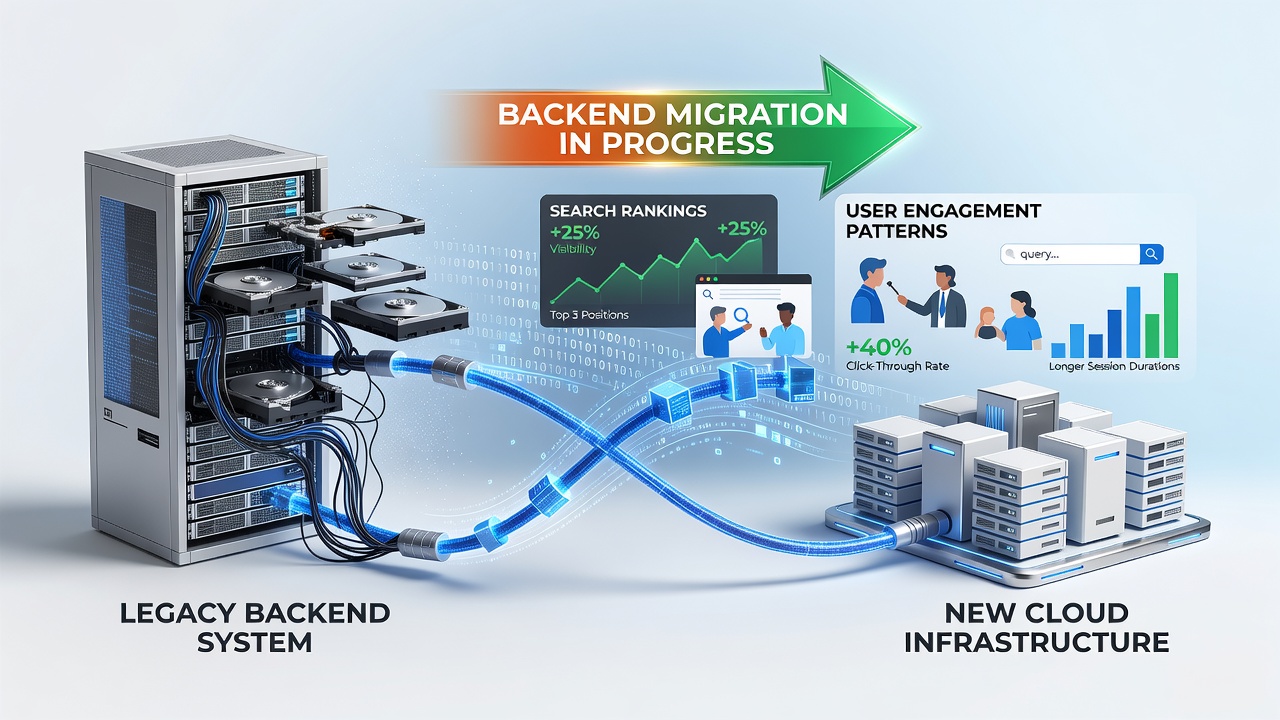
Backend migrations in e-commerce platforms involve shifts from legacy servers and databases to updated infrastructure, and these changes often alter how search engines index product pages while reshaping visitor interaction patterns. Research indicates that such transitions can trigger temporary drops in crawl frequency when URL structures shift or server responses change, yet long-term gains appear when page load speeds improve through optimized code and caching layers. Observers note that sites undergoing these updates frequently experience indexing delays lasting several weeks, during which new product listings remain absent from results until search engine bots complete fresh scans.
Search Ranking Shifts After Infrastructure Updates
Data from multiple platform analyses shows that ranking fluctuations correlate closely with downtime duration and redirect implementation quality, since incomplete 301 mappings leave duplicate content signals that dilute authority. Experts have observed that e-commerce operators who maintain consistent server response codes during cutovers see smaller ranking volatility compared with those facing extended outages, and this pattern holds across retail categories from fashion to electronics. In September 2026 several mid-sized stores documented ranking recoveries within 14 days after adopting structured data enhancements alongside their backend switches, suggesting that content markup plays a role in accelerating re-indexing.
Studies reveal that core web vitals metrics such as largest contentful paint improve post-migration when content delivery networks receive better integration, and these enhancements feed directly into ranking algorithms that prioritize speed. Researchers discovered that sites preserving HTTPS continuity and avoiding mixed content warnings during transitions avoid additional penalties that otherwise compound ranking losses. Those who've tracked these events note that keyword position changes tend to stabilize once sitemaps receive updates and internal linking structures remain intact throughout the process.
User Engagement Adjustments During Platform Transitions
Engagement metrics including session duration and bounce rates respond to the same infrastructure modifications, because faster database queries reduce checkout friction while smoother navigation flows encourage deeper product exploration. Figures reveal that average time on site often rises after migrations when personalized recommendation engines gain access to real-time inventory data previously siloed in older systems. Yet initial periods can show temporary dips in add-to-cart actions if search functionality experiences brief inconsistencies while new indexing services come online.
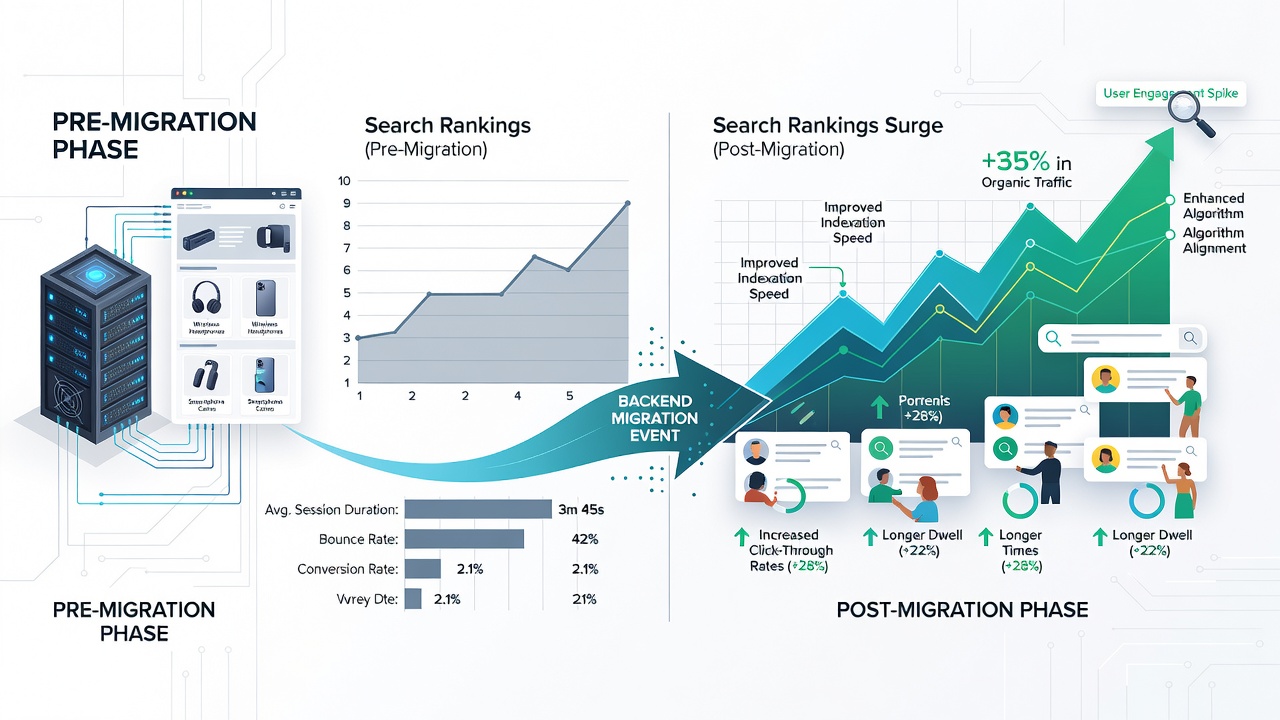
Take one retailer that migrated its product catalog database in early 2025 and recorded a 22 percent increase in pages per session once the new system handled concurrent user loads without lag. Another case shows engagement rebounding after mobile-specific API endpoints stabilized, allowing push notifications to resume without delivery errors that previously frustrated returning visitors. Data indicates that repeat purchase rates climb when backend changes enable accurate stock synchronization across regions, reducing instances of out-of-stock messaging that drive users away.
Technical Factors Influencing Both Rankings and Behavior
Server-side rendering improvements introduced during migrations frequently boost both search visibility and engagement simultaneously, since search engines favor fully rendered pages while users encounter complete product details without waiting for client-side scripts. Evidence suggests that API rate limiting adjustments help prevent crawler blocks that could otherwise delay re-indexing and simultaneously maintain responsive checkout paths for human visitors. Those monitoring these migrations find that log file analysis becomes essential for identifying which endpoints receive the most bot traffic, allowing teams to prioritize stability for high-value category pages.
According to reports from the European Commission on digital market performance, consistent uptime above 99.5 percent during infrastructure changes correlates with sustained user retention across cross-border retail platforms. A separate analysis from the Australian Bureau of Statistics highlights how improved backend scalability supports higher transaction volumes during peak periods without corresponding increases in cart abandonment. These patterns demonstrate that the same technical adjustments affecting crawl efficiency also shape how visitors perceive site reliability.
Long-Term Patterns Observed Across Multiple Platforms
Over extended observation windows researchers have tracked how engagement metrics such as return visit frequency stabilize or improve once backend architectures support advanced personalization features unavailable in prior setups. Search rankings similarly settle into new equilibria when content freshness signals strengthen through automated inventory feeds that keep product availability data current. Observers note that sites completing migrations without altering canonical tags preserve existing ranking equity more effectively than those introducing conflicting signals.
What's interesting is how regional differences emerge, with North American platforms often reporting quicker ranking rebounds than counterparts in Asia due to variations in crawler prioritization and local CDN performance. The reality is that both search algorithms and user behavior respond to measurable improvements in latency and data accuracy, making backend decisions central to sustained e-commerce visibility.
Conclusion
Backend migrations produce measurable effects on search rankings through changes in crawlability, speed, and indexing signals, while user engagement patterns shift in response to performance gains and feature enhancements enabled by updated infrastructure. Data shows these outcomes depend on execution details including redirect quality, uptime maintenance, and content structure preservation. Those tracking e-commerce performance across 2025 and into September 2026 continue to document how coordinated technical adjustments during such transitions support recovery in both visibility and interaction metrics.